
Memory support care Sewall’s Point families arrange keeps a parent living with Alzheimer’s or dementia calm, safe, and engaged at home, with trained caregivers who protect their dignity and keep relatives informed.


Memory support care Sewall’s Point families choose is non-medical, in-home care for someone living with Alzheimer’s disease or another form of dementia. For families on the peninsula, a diagnosis often comes with two worries at once: keeping a parent safe in a home near deep water, and protecting the dignity of someone who has long been a respected member of the community.
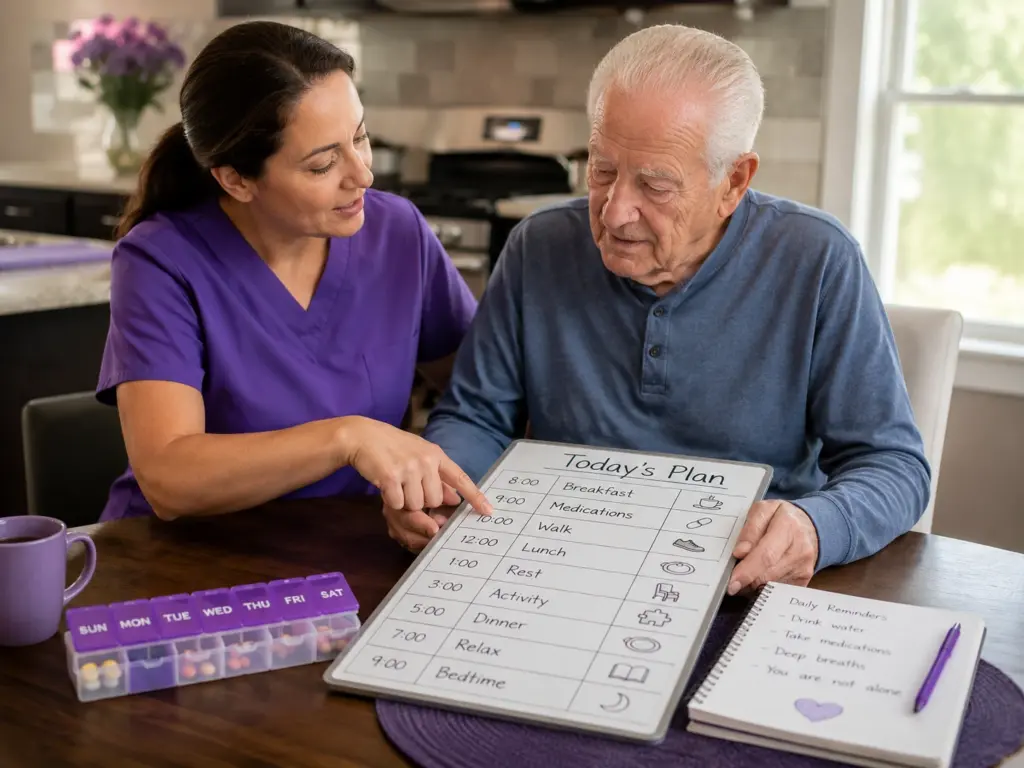
Hummingbird caregivers are trained in dementia care before they work with memory clients. They build predictable days around meals, rest, and meaningful activity, approach bathing and dressing gently, provide medication reminders, and keep the kitchen and home safe. When confusion or agitation appears, they use calm redirection rather than correction or argument.
Waterfront homes require careful safety planning. Docks, seawalls, pools, and boats can all be dangerous for someone with impaired judgment. During the consultation we identify those risks and recommend practical measures such as door and gate alarms, pool barriers, secured boat keys, and supervised outdoor time. Our caregivers follow that plan every visit.
Familiar surroundings often help people with dementia stay calm and oriented. The view of the lagoon, a favorite chair, and the routines of a long-held home can be powerful anchors. Our goal is to keep your parent there safely for as long as it is the right place.
Memory care can start with a few hours a day and grow into overnight shifts or 24 hour in home care as the disease progresses. Families who need planned time off can use our respite care. The Alzheimer’s Association offers a free 24/7 helpline and support groups for families near and far.
Communication is especially important for adult children who live away. Directors share regular updates, caregivers keep detailed notes, and we explain changes as they happen. When family visits, they find a parent who is clean, calm, well fed, and cared for.
We keep the same small team on every memory care schedule, matched by personality and interests, because familiar faces reduce anxiety and build trust.
All of our services are on the Sewall’s Point home care page, or call (772) 202-2213 to talk with a director.
Hydration and nutrition need constant attention in memory care. People with dementia often forget to drink, lose interest in meals, or have trouble with utensils. Caregivers offer fluids and snacks throughout the day, prepare foods that are easy to eat, and share meals so they feel social. They track what was eaten and alert the family to any decline.
Many Sewall’s Point families tell us their parent would be deeply embarrassed if neighbors learned about their memory loss. We take that seriously. Caregivers are discreet in public, help your parent feel confident on outings, and never discuss your family’s situation with anyone outside your circle.
Meaningful activity is central to good memory care. A retired sailor may enjoy watching boats pass or handling familiar lines and knots. A lifelong host may enjoy setting the table or arranging flowers. A former executive may enjoy reading the paper and discussing the news. We learn your parent’s history and build each day around who they have always been.
Sundowning, the restlessness and confusion that often appear in late afternoon and evening, is one of the hardest parts of dementia. Caregivers keep evenings calm, turn lights on before dusk, reduce noise, and use gentle reassurance. Many families begin memory care by covering exactly those hours.
We also support the spouse. A husband or wife caring for a partner with dementia can become exhausted and isolated, especially if children live far away. Regular memory care gives the spouse time to rest, keep up friendships, and attend to their own health. Our directors connect spouses with support groups and education.
If your parent also needs hands-on help with bathing and dressing, it comes built into the plan through our personal assistance care.
Planning ahead reduces stress. Directors explain the stages of dementia, the signs that more help may be needed, and the options available, so families can make decisions together calmly rather than in a crisis.
We coordinate with physicians when helpful. Caregivers can accompany your parent to appointments, share observations, and help the family pass important information to the doctor.
Through every stage, we treat your parent with respect, warmth, and patience.
Families visiting from out of town can also learn from our caregivers. We are glad to show relatives the routines and phrases that work, so their time with a parent feels easier and more connected. Many adult children tell us those tips transformed their visits.
We also respect your parent’s lifelong habits. If they always dressed for dinner, read the morning paper on the lanai, or walked to the end of the street at sunset, those rituals become anchors in the care plan.
If memory loss is changing life at home in Sewall’s Point, call Hummingbird Care Services and talk with a real person about dementia care.
Our trained caregivers bring structure, safety, and patience to every day at home.
Here is what memory support usually looks like in a Sewall’s Point home.

We pair caregivers with clients by temperament, interests, and language.

Notes after each visit help relatives notice changes early.

Small home changes reduce wandering, falls, and kitchen accidents.
Supervision, structured routines, personal care, meals and fluids, medication prompts, wandering prevention, meaningful activities, and calm redirection during confusion or agitation.
We recommend alarms, barriers, and secured keys, and caregivers supervise closely whenever he is outdoors.
Yes. Caregivers are discreet, help her feel confident in public, and never discuss your family with outsiders.
Yes. Every caregiver working with memory clients completes dementia training before their first visit.
Directors provide regular updates by phone, text, or email, and caregivers keep notes you can review.
Calm evenings, early lighting, reduced noise, familiar music, and gentle reassurance.
Yes. Awake overnight caregivers help with nighttime wandering and confusion.
Caregivers try a different time or approach, offer choices, and never force care.
Yes. Caregivers can accompany her to appointments and help relay observations.
We provide regular breaks, share helpful techniques, and connect spouses with support groups.
Yes. We keep the same team whenever possible and add hours as needed.
Yes. Directors give honest guidance and help families plan next steps.
Call (772) 202-2213. A director will visit, assess safety, and build a plan around your parent's interests.
Yes. Caregivers are glad to show relatives the routines and communication techniques that work best for your parent.
Caregivers handle cooking, supervise any kitchen activity, and can suggest stove shutoff devices and knob covers.
Music, photo albums, folding laundry, simple cooking, gardening, puzzles, and short walks, chosen around what your loved one still enjoys.
We share notes after each visit, explain changes we see, and point families to support groups and education through trusted organizations.
Answers to the questions Sewall’s Point families ask most about dementia care at home.
Hummingbird Care Services helps Sewall’s Point seniors living with dementia stay safe and comfortable at home. Call (772) 202-2213 to talk with a real person about memory care.
Join us for coffee and discussions surrounding living well and aging gracefully at the Bay Street Pharmacy Classroom in Unit 2 in Sebastian!