
How Is Parkinson’s Diagnosed is a question many families ask when a loved one begins showing signs such as tremors, stiffness, slower movement, balance problems, changes in walking, or difficulty completing daily routines. Parkinson’s disease can be difficult to identify in its earliest stages because symptoms often develop gradually and may look similar to normal aging, arthritis, medication side effects, or other neurological conditions.
A Parkinson’s diagnosis is usually not made from one single test. Instead, doctors look at a person’s medical history, symptoms, physical exam, neurological exam, and sometimes additional testing to rule out other conditions. In many cases, diagnosis is made by a neurologist, especially a movement disorder specialist, who is trained to recognize patterns in movement, balance, reflexes, and coordination.
Understanding How Is Parkinson’s Diagnosed can help families prepare for appointments, know what questions to ask, and recognize why the process may take time. A careful diagnosis matters because the right treatment plan, therapy, safety support, and home care decisions often depend on understanding what is truly causing the symptoms.

Why Parkinson’s Disease Can Be Difficult to Diagnose
Parkinson’s disease is a progressive neurological condition that affects movement and other body functions over time. It is most often associated with tremors, stiffness, slowed movement, and balance issues. However, not every person with Parkinson’s has the same symptoms, and not every symptom appears at the beginning.
Some people first notice a tremor in one hand. Others may develop stiffness, smaller handwriting, softer speech, a reduced arm swing while walking, changes in posture, or slower movement. These early symptoms may be mild, and many people adapt without realizing something more serious may be happening.
The National Institute of Neurological Disorders and Stroke explains that Parkinson’s disease is typically diagnosed based on a person’s medical history and neurological examination, while lab tests may be used to rule out other disorders. More information is available here: https://www.ninds.nih.gov/health-information/disorders/parkinsons-disease
This is why diagnosis often requires careful observation rather than a quick answer. A doctor is not only looking for one symptom, but a pattern of symptoms that fits Parkinson’s disease and not another condition.

The First Step: Medical History
The first major step in diagnosing Parkinson’s disease is a detailed medical history. A doctor will ask questions about when symptoms began, how they have changed, whether they affect one side of the body more than the other, and how they impact daily life.
Families should be prepared to discuss changes in walking, balance, handwriting, facial expression, speech, sleep, mood, digestion, and energy levels. Even symptoms that do not seem connected may be important. Parkinson’s disease can involve both movement symptoms and non-movement symptoms, including constipation, sleep problems, depression, anxiety, fatigue, and changes in sense of smell.
A doctor may also ask about medications, past injuries, family history, chemical exposure, other medical conditions, and whether symptoms improve or worsen at certain times of day. Some medications can cause Parkinson-like symptoms, so reviewing current and past prescriptions is an important part of the process.
When families wonder How Is Parkinson’s Diagnosed, this detailed conversation is often one of the most important parts. The medical history gives the doctor context and helps determine whether symptoms fit the pattern of Parkinson’s disease or point toward another cause.
The Neurological Exam
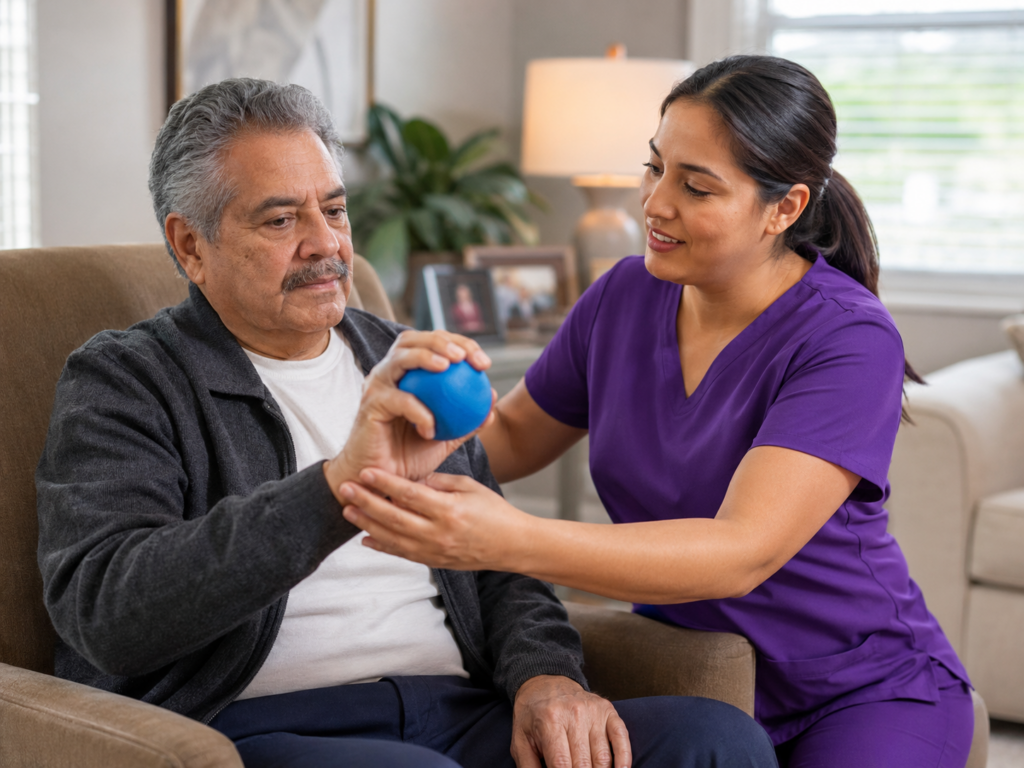
A neurological exam is central to diagnosing Parkinson’s disease. During this exam, a doctor evaluates how the nervous system is functioning. This may include checking movement, coordination, reflexes, balance, walking, muscle tone, posture, facial expression, and hand movements.
The doctor may ask the person to walk across the room, turn around, tap their fingers, open and close their hands, move their arms, stand from a chair, or perform simple coordination tasks. These movements help reveal whether there is slowness, stiffness, tremor, reduced arm swing, balance difficulty, or other signs that may suggest Parkinson’s disease.
Mayo Clinic notes that there is no specific test to diagnose Parkinson’s disease and that diagnosis is based on medical history, symptoms, and neurological and physical examination by a doctor trained in nervous system conditions. More information is available here: https://www.mayoclinic.org/diseases-conditions/parkinsons-disease/diagnosis-treatment/drc-20376062
This exam is not meant to be intimidating. It is usually a practical evaluation of how the body moves and responds. For families, it can be helpful to observe and take notes because the doctor may explain what they are seeing during the evaluation.

Key Movement Symptoms Doctors Look For
When diagnosing Parkinson’s disease, doctors often look for several key movement symptoms. These include bradykinesia, tremor, rigidity, and postural instability. Bradykinesia means slowness of movement, and it is one of the most important signs doctors evaluate.
A tremor may occur when the hand, fingers, foot, jaw, or chin is at rest. This is often called a resting tremor. Rigidity refers to muscle stiffness that may affect the arms, legs, neck, or trunk. Postural instability involves balance problems and is often more noticeable as the condition progresses.
The Parkinson’s Foundation explains that Parkinson’s disease primarily affects movement and that slowness, tremor, and rigidity are key movement symptoms used in diagnosis. Their overview of movement symptoms is available here: https://www.parkinson.org/understanding-parkinsons/movement-symptoms
It is important to understand that symptoms can vary. A person may have Parkinson’s disease without a dramatic tremor. Another person may have a tremor caused by something other than Parkinson’s. This is why a complete exam matters.
Why a Movement Disorder Specialist May Be Helpful
A general doctor may be the first provider to notice possible signs of Parkinson’s disease, but many individuals are referred to a neurologist for further evaluation. In some cases, families may benefit from seeing a movement disorder specialist.
A movement disorder specialist is a neurologist with additional training and experience in conditions that affect movement, including Parkinson’s disease. These specialists often have deeper experience recognizing early symptoms, distinguishing Parkinson’s from similar conditions, and adjusting treatment plans over time.
The Parkinson’s Foundation describes movement disorder specialists as neurologists who specialize in conditions like Parkinson’s disease and have experience treating it at every stage. More information is available here: https://www.parkinson.org/living-with-parkinsons/finding-care/building-your-team
If symptoms are unclear, progressing quickly, or not responding as expected to treatment, a movement disorder specialist may provide additional clarity. This can be especially helpful for families who feel uncertain after an initial evaluation.
Ruling Out Other Conditions
One of the most important parts of diagnosing Parkinson’s disease is ruling out other possible causes. Several conditions can cause symptoms that look similar to Parkinson’s, including essential tremor, medication side effects, stroke, thyroid problems, normal pressure hydrocephalus, certain types of dementia, and other movement disorders.
This is why doctors may order blood tests, imaging, or other evaluations. These tests may not prove Parkinson’s disease directly, but they can help rule out other explanations. For example, a blood test may help identify metabolic or thyroid issues. Brain imaging may help rule out stroke, tumors, or other structural causes.
When families ask How Is Parkinson’s Diagnosed, this part of the process can feel frustrating because it may seem like doctors are looking for everything except Parkinson’s. In reality, ruling out other conditions is a responsible and necessary step. An accurate diagnosis helps avoid unnecessary treatment and ensures that the care plan fits the actual condition.

Is There a Blood Test for Parkinson’s Disease?
Currently, there is no standard blood test that can definitively diagnose Parkinson’s disease for most people. Research is ongoing, and scientists continue to study biomarkers that may help detect Parkinson’s earlier or more accurately in the future. However, in everyday clinical practice, diagnosis is still mostly based on symptoms, history, and neurological exam.
Blood tests may still be ordered during the evaluation process. These tests can help doctors look for other conditions that may be contributing to symptoms. For example, vitamin deficiencies, thyroid problems, infections, medication effects, or other medical issues may affect movement, energy, or balance.
This distinction is important. Blood work can be useful, but it is usually not the tool that confirms Parkinson’s disease.
The Role of Brain Imaging and DaTscan
Brain imaging may be used in some cases, but it is not always required. A doctor may order an MRI or CT scan if they want to rule out other causes of symptoms, such as a stroke, tumor, or structural brain change. These scans may not show Parkinson’s disease itself in a clear way.
A specialized imaging test called a DaTscan may sometimes be used when the diagnosis is unclear. A DaTscan helps evaluate dopamine transporter activity in the brain and may help distinguish Parkinsonian syndromes from some other conditions, such as essential tremor. However, it is not needed in every case.
The Parkinson’s Foundation explains that a DaTscan is often not necessary when a person’s history and exam are typical for Parkinson’s disease, but it may be used when symptoms are mild or diagnostic criteria are not fully met. More information is available here: https://www.parkinson.org/understanding-parkinsons/getting-diagnosed
Families should not assume that more testing always means better care. Sometimes a skilled clinical exam provides the clearest answer. Other times, additional testing is helpful. The decision depends on the individual situation.

How Medication Response Can Support Diagnosis
In some cases, a doctor may consider how a person responds to Parkinson’s medication. Because Parkinson’s disease is linked to reduced dopamine activity, medications that support dopamine may improve certain movement symptoms. A positive response can support the diagnosis, although it is not the only factor.
Medication response can vary from person to person. Some individuals improve noticeably. Others may have more modest improvement or may need adjustments before benefits are clear. Side effects and other medical conditions may also influence which medications are used.
It is important that families do not try to evaluate this on their own. Medication should be prescribed and monitored by a medical professional. Parkinson’s treatment often requires careful timing, dose adjustments, and ongoing follow-up.
Tracking Symptoms Before the Appointment
Families can help the diagnostic process by tracking symptoms before the medical visit. This does not need to be complicated. A simple written record can help the doctor understand what is happening in daily life.
Useful details may include when symptoms began, whether they started on one side, whether tremors happen at rest or during movement, whether walking has changed, whether falls have occurred, and whether daily activities are taking longer. It can also help to note changes in sleep, mood, constipation, voice, handwriting, memory, or energy.
If symptoms come and go, write down when they seem better or worse. If medication, fatigue, stress, or time of day affects symptoms, mention that during the visit.
This type of preparation can make a major difference. Doctors see the person for a limited time, but family members often notice patterns that are not obvious during a short appointment.

Early Diagnosis Matters
Early diagnosis can help individuals and families begin planning sooner. While Parkinson’s disease cannot currently be cured, treatment and support can improve quality of life. Physical therapy, occupational therapy, speech therapy, exercise, medication, and home safety changes may all be helpful.
Early diagnosis also gives families time to discuss care preferences, home safety, transportation, fall prevention, medication routines, and daily support. It may reduce stress by replacing uncertainty with a clearer plan.
When someone is asking How Is Parkinson’s Diagnosed, they may be worried about what comes next. While a diagnosis can feel emotional, it can also be the beginning of meaningful support. Knowing what is happening allows families to make informed decisions rather than guessing.
What Happens After Diagnosis
After a Parkinson’s diagnosis, the next step is usually building a care plan. This may include follow-up with a neurologist, medication management, therapy referrals, exercise recommendations, lifestyle adjustments, and support for daily living.
Families may also begin thinking about safety at home. Parkinson’s disease can affect balance, walking, reaction time, and mobility. Over time, a loved one may need help with bathing, dressing, meal preparation, transportation, medication reminders, or supervision during certain parts of the day.
Home care can support these needs without replacing medical care. Non-medical caregivers can help with daily routines, companionship, mobility support, and comfort. For families exploring support at home, Hummingbird Care Services provides in-home care services that can help loved ones remain safe and supported: https://www.hummingbirdcareservices.com/in-home-care-services/

How Home Care Supports Families During the Diagnosis Process
Even before a diagnosis is fully confirmed, families may notice that a loved one needs extra help at home. A person may be moving more slowly, feeling unsteady, forgetting routines, or struggling with tasks that used to feel simple. Support at home can help reduce risk while the medical evaluation continues.
Caregivers may assist with daily routines, meal preparation, light housekeeping, companionship, transportation, and medication reminders. They can also help create consistency, which is often helpful for someone experiencing movement or cognitive changes.
Hummingbird Care Services focuses on personalized, non-medical support that helps individuals maintain dignity and comfort at home. Families can learn more about the team and approach here: https://www.hummingbirdcareservices.com/about-us/
Questions to Ask the Doctor
When meeting with a doctor or neurologist, families may want to ask clear questions. These may include whether symptoms suggest Parkinson’s disease or another condition, whether additional testing is needed, whether a movement disorder specialist should be involved, and what treatment options may help.
It can also be helpful to ask what symptoms should be monitored, when to call the doctor, whether therapy is recommended, and how to reduce fall risk at home. Families may also want to ask how often follow-up appointments should occur and whether medication timing matters.
The goal is not to ask every possible question at once. The goal is to leave the appointment with a better understanding of the next step.
Conclusion
How Is Parkinson’s Diagnosed is an important question because there is no single simple test that confirms Parkinson’s disease in every case. Diagnosis is usually based on medical history, symptom review, neurological exam, physical evaluation, and sometimes additional testing to rule out other conditions. In many cases, a neurologist or movement disorder specialist plays an important role.
The process can take time, especially when symptoms are early or unclear. However, a careful diagnosis helps families understand what is happening and what support may be needed. Early evaluation, symptom tracking, medical follow-up, therapy, and home safety planning can all help individuals living with Parkinson’s disease maintain quality of life.
If your loved one is experiencing movement changes, balance concerns, or difficulty with daily routines, medical guidance is the first step. If additional support at home becomes necessary, Hummingbird Care Services can help provide dependable, non-medical care designed around your family’s needs.