
What Causes Parkinson’s Disease is one of the most common questions families ask after a loved one receives a diagnosis or begins showing symptoms such as tremors, stiffness, slower movement, balance problems, or changes in daily routines. It is a natural question because families want to understand why this happened, whether it could have been prevented, and what it may mean for the future.
The honest answer is that Parkinson’s disease does not usually have one single cause and to understand what it is is just as important as the cause. Researchers believe Parkinson’s develops from a combination of factors, including changes in the brain, aging, genetics, environmental exposures, and possibly other influences that are still being studied. For most people, Parkinson’s disease is not caused by one clear event, one lifestyle choice, or one family history factor. It is a complex neurological condition that develops over time.
Understanding What Causes Parkinson’s Disease can help families better understand the condition, ask better questions during medical visits, and feel more prepared to support a loved one. While knowing the exact cause may not always be possible, understanding risk factors and how Parkinson’s affects the brain can provide clarity during an uncertain time.

Understanding Parkinson’s Disease Before Looking at the Causes
Before exploring causes, it helps to understand what Parkinson’s disease is. Parkinson’s is a progressive neurological disorder that affects the brain and nervous system. It is best known for movement symptoms, including tremors, stiffness, slowed movement, and balance difficulties. However, Parkinson’s can also affect sleep, mood, digestion, speech, memory, and daily independence.
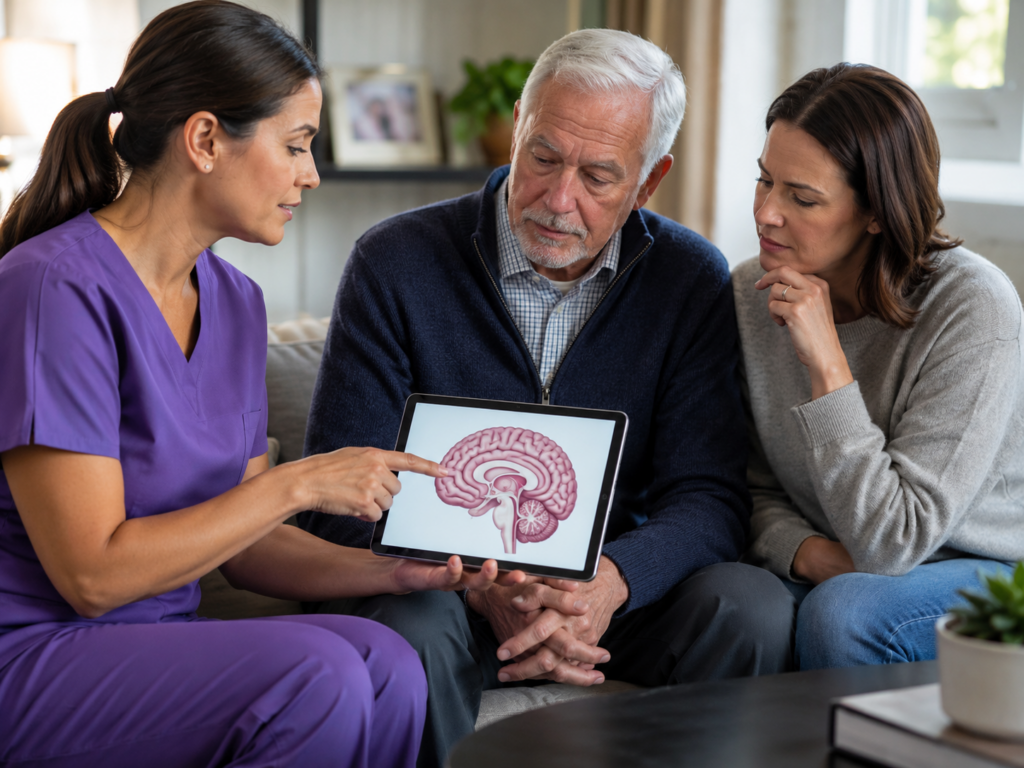
Parkinson’s disease is strongly connected to the loss of dopamine-producing nerve cells in an area of the brain that helps control movement. Dopamine is a chemical messenger that helps the brain send signals involved in smooth, coordinated motion. When dopamine levels decline, movement can become slower, stiffer, and harder to control.
The National Institute of Neurological Disorders and Stroke explains that the exact cause of Parkinson’s disease is unknown, but researchers believe the risk likely comes from a mix of genetic and environmental factors. You can read more from NINDS here: https://www.ninds.nih.gov/health-information/disorders/parkinsons-disease
This is why What Causes Parkinson’s Disease is not always a simple question. Parkinson’s is not like an infection where one germ causes one illness. It is a condition that appears to develop through several overlapping changes in the brain and body.
The Role of Dopamine and Brain Cell Changes
One of the most important things to understand about Parkinson’s disease is that it involves the gradual loss of certain brain cells. These cells produce dopamine, which supports movement, coordination, and other important functions. As these cells decline, Parkinson’s symptoms begin to appear.
The loss of dopamine does not happen all at once. Symptoms often develop slowly, sometimes over years. A person may first notice a small tremor, stiffness in one arm, slower walking, smaller handwriting, or reduced facial expression. Because these changes can be subtle, they are sometimes mistaken for normal aging or general weakness.
Researchers also study abnormal protein buildup in the brain, especially a protein called alpha-synuclein. In Parkinson’s disease, this protein can form clumps known as Lewy bodies. Scientists are still studying how these changes relate to brain cell damage and symptom progression.
This does not mean a family can look at one factor and say, “This is exactly what caused Parkinson’s.” Instead, the brain changes associated with Parkinson’s appear to develop from a complicated combination of biological processes.
Age as a Major Risk Factor
Age is one of the clearest risk factors for Parkinson’s disease. While younger adults can develop Parkinson’s, the condition is much more common in older adults. Many people first develop symptoms after age 60, although early-onset Parkinson’s can occur before age 50.
The National Institute on Aging explains that Parkinson’s disease most often affects older adults, though younger people can develop it as well. Their resource on Parkinson’s disease is available here: https://www.nia.nih.gov/health/parkinsons-disease
This does not mean Parkinson’s is a normal part of aging. Most older adults do not develop Parkinson’s disease. However, aging may make the brain more vulnerable to the changes involved in Parkinson’s. Over time, cells may become less resilient, and the body’s ability to repair certain types of damage may decline.
When families ask What Causes Parkinson’s Disease, age is often part of the answer, but it is not the whole answer. Aging may increase risk, but it does not explain why one person develops Parkinson’s while another person of the same age does not.

Genetics and Family History
Genetics can play a role in Parkinson’s disease, but most cases are not directly inherited in a simple way. This is important because families often worry that if one person has Parkinson’s, everyone else in the family is likely to develop it. That is usually not the case.
Some gene changes are associated with Parkinson’s disease, and certain inherited forms do exist. However, most people with Parkinson’s do not have a strong family history. In many cases, genetics may increase risk rather than directly cause the disease.
The Parkinson’s Foundation explains that Parkinson’s disease results from a mix of genetic and environmental factors, while only a smaller portion of people with Parkinson’s have a known genetic link. Their genetics resource is available here: https://www.parkinson.org/understanding-parkinsons/causes/genetics
Family history may matter more if several close relatives have Parkinson’s or if symptoms begin at a younger age. In those situations, a neurologist may discuss whether genetic counseling or testing is appropriate. Still, genetic testing is not necessary for every person with Parkinson’s and does not always provide a clear answer.
Environmental Factors and Parkinson’s Risk
Environmental exposures are another area researchers continue to study. Some studies have looked at possible links between Parkinson’s disease and exposure to pesticides, herbicides, solvents, heavy metals, air pollution, and head injuries. These exposures do not guarantee a person will develop Parkinson’s, but they may increase risk in some cases.
The Parkinson’s Foundation notes that environmental factors such as pesticide exposure, head injury, and area of residence can influence Parkinson’s risk, often interacting with genetic and lifestyle factors. You can learn more here: https://www.parkinson.org/understanding-parkinsons/causes
This is one reason What Causes Parkinson’s Disease can be difficult to answer. A person’s lifetime exposure history is complex. Where someone lived, what work they did, what chemicals they encountered, and how their body responded may all matter. However, researchers cannot always identify one exposure that clearly caused the disease in a specific person.
For families, it is best to think of environmental factors as possible risk contributors rather than definite causes. Parkinson’s disease likely develops when multiple risk factors come together over time.
Head Injury and Brain Health
Past head injury is another possible risk factor that has been studied in relation to Parkinson’s disease. Some research suggests that traumatic brain injury may increase Parkinson’s risk, especially when injuries are repeated or severe. However, not everyone who has had a head injury develops Parkinson’s disease.
Brain health is complex. A head injury may create inflammation, damage nerve cells, or affect long-term brain function. Researchers continue to study how this may relate to Parkinson’s and other neurological conditions.
For families, this information should be understood carefully. A single fall or past concussion does not mean Parkinson’s disease is inevitable. It simply means that brain injury is one of several factors researchers are examining as part of the larger picture of Parkinson’s risk.
Sex and Parkinson’s Disease Risk
Parkinson’s disease appears to affect men more often than women. Researchers are still studying why this difference exists. Possible explanations may include hormones, genetics, environmental exposures, occupational risks, or biological differences in how cells respond to stress.
Mayo Clinic lists sex as one of the risk factors for Parkinson’s disease, noting that men are more likely to develop the condition than women. Their overview is available here: https://www.mayoclinic.org/diseases-conditions/parkinsons-disease/symptoms-causes/syc-20376055
This does not mean women are protected from Parkinson’s disease. Women can and do develop Parkinson’s. It simply means that, statistically, men appear to have a higher risk. This is another example of how Parkinson’s risk is influenced by more than one factor.
Does Lifestyle Cause Parkinson’s Disease?
Families sometimes wonder whether diet, exercise, stress, or lifestyle choices caused Parkinson’s disease. This is understandable, but it is important not to place blame on the person diagnosed.
There is no strong evidence that Parkinson’s disease is caused by one poor lifestyle choice. A person does not develop Parkinson’s simply because they ate the wrong foods, worked too much, felt stressed, or failed to exercise enough. Lifestyle can influence overall health, but Parkinson’s disease is far more complex than that.
That said, healthy habits may still support quality of life after diagnosis. Regular movement, good nutrition, sleep support, social engagement, and medical follow-up can all play an important role in helping someone manage Parkinson’s symptoms. These habits do not erase the condition, but they may help support strength, mood, mobility, and independence.
Why Parkinson’s Disease Can Be Hard to Predict
One of the reasons What Causes Parkinson’s Disease remains difficult to answer is that symptoms often begin long before diagnosis. Brain changes may develop gradually for years before movement symptoms become obvious. By the time a person notices tremor or stiffness, the underlying process may have been happening silently for a long time.
Researchers are working to identify earlier warning signs and biomarkers that could help diagnose Parkinson’s sooner. Some early signs may include loss of smell, constipation, sleep disturbances, subtle movement changes, or mood symptoms. However, these signs can also occur for many other reasons, so they do not automatically mean someone has Parkinson’s.
This uncertainty can be frustrating for families. Still, it highlights the importance of medical evaluation when changes become noticeable or begin interfering with daily life.

Can Parkinson’s Disease Be Prevented?
At this time, there is no guaranteed way to prevent Parkinson’s disease. Because the exact cause is unknown and risk factors are complex, prevention is not straightforward. Researchers continue to study whether certain lifestyle factors, environmental protections, or early interventions may reduce risk.
For now, the best approach is to focus on overall health and early recognition. Staying physically active, protecting the brain from injury, reducing unnecessary exposure to harmful chemicals when possible, and seeking medical guidance for concerning symptoms are all reasonable steps.
However, families should avoid thinking that Parkinson’s disease happened because something obvious was missed. Many people who live healthy lives still develop Parkinson’s. Many people with possible risk factors never develop it. The condition remains complex and not fully predictable.
What Families Should Do After a Diagnosis
Once a loved one is diagnosed, the focus should shift from “Why did this happen?” to “What support will help now?” Medical care, therapy, exercise, home safety planning, emotional support, and daily assistance can all make a meaningful difference.
Families should work closely with a neurologist or movement disorder specialist. It may also be helpful to involve physical therapists, occupational therapists, speech therapists, and home care providers as needs change.
Non-medical home care can help support daily routines, companionship, personal care, meal preparation, transportation, medication reminders, and safety supervision. This support can help individuals remain in the comfort of home while reducing pressure on family caregivers.
Families exploring in-home care options can learn more about Hummingbird Care Services here: https://www.hummingbirdcareservices.com/in-home-care-services/

How Home Care Can Support Someone with Parkinson’s Disease
Home care does not treat the neurological cause of Parkinson’s disease, but it can support the everyday challenges that come with the condition. Parkinson’s can make daily life slower, less predictable, and more physically demanding. Having dependable support at home can help preserve dignity, independence, and comfort.
A caregiver may help with morning routines, bathing, dressing, grooming, meals, light housekeeping, mobility support, and transportation to appointments. They may also provide companionship and help maintain structure throughout the day. For someone with Parkinson’s, routine can be especially valuable because consistency may reduce stress and confusion.
Home care can also give families time to rest. Family caregivers often do a tremendous amount of work behind the scenes, and Parkinson’s care needs may increase over time. Having support can make care more sustainable for everyone involved.
To learn more about the values and approach behind Hummingbird Care Services, visit: https://www.hummingbirdcareservices.com/about-us/
What Causes Parkinson’s Disease and What Families Should Remember
What Causes Parkinson’s Disease is a question with no single answer. Parkinson’s appears to develop from a combination of brain cell changes, dopamine loss, aging, genetics, environmental exposures, and other biological factors that researchers are still studying.
For most individuals, Parkinson’s disease is not caused by one clear event. It is not the result of personal failure, weakness, or something the family should have noticed earlier. The condition is complex, and even medical experts continue to study why it develops.
The most important thing families can do is stay informed, seek medical care, and create a support plan that helps their loved one live as safely and comfortably as possible. Understanding risk factors can be helpful, but support, treatment, and quality of life matter most after diagnosis.
Conclusion
What Causes Parkinson’s Disease is an important question, but the answer is complex. Parkinson’s disease does not usually have one single cause. Researchers believe it develops through a mix of genetic risk, environmental exposure, age-related changes, and neurological processes that affect dopamine-producing cells in the brain.
While families may never know exactly why their loved one developed Parkinson’s, they can still take meaningful steps forward. Medical care, therapy, exercise, home safety planning, family support, and in-home care can help improve daily life and provide reassurance.
If your loved one is living with Parkinson’s disease and needs help with daily routines, safety, or companionship, Hummingbird Care Services can provide supportive non-medical home care tailored to your family’s needs.