
What Is Parkinson’s Disease is one of the first questions families ask when they begin noticing changes in movement, balance, speech, energy, or daily routines in someone they love. Parkinson’s disease is a progressive neurological condition that affects the brain and nervous system. It is most commonly known for movement symptoms such as tremors, stiffness, and slower movement, but the condition can affect much more than how a person walks or moves.
Parkinson’s disease can also influence sleep, mood, digestion, speech, facial expression, balance, memory, and independence over time. For some individuals, symptoms develop slowly and may be easy to overlook in the beginning. A loved one may seem a little slower getting up from a chair, have smaller handwriting, speak more softly, or experience stiffness that is mistaken for normal aging. Because the early signs can be subtle, understanding Parkinson’s disease can help families recognize when it may be time to seek medical guidance.
This article explains What Is Parkinson’s Disease in clear, practical terms. It covers what happens in the brain, common symptoms, possible causes, diagnosis, treatment options, and how in-home support can help individuals living with Parkinson’s maintain safety, dignity, and quality of life.

What Is Parkinson’s Disease in Simple Terms
Parkinson’s disease is a brain disorder that affects movement and coordination. It develops when certain nerve cells in the brain become damaged or die. These nerve cells are involved in producing dopamine, a chemical messenger that helps the brain control smooth and coordinated movement. When dopamine levels decrease, movement can become slower, stiffer, and harder to control.
The National Institute of Neurological Disorders and Stroke describes Parkinson’s disease as a progressive movement disorder that can cause tremor, stiffness, impaired balance, and difficulty with walking or completing simple tasks.
The word progressive means symptoms usually develop gradually and may become more noticeable over time. Parkinson’s disease does not look exactly the same for every person. Some individuals first notice a tremor. Others may notice stiffness, slower walking, reduced arm swing, balance changes, voice changes, or a general sense that everyday movements require more effort than before.
When families ask What Is Parkinson’s Disease, the simplest answer is this: Parkinson’s is a long-term neurological condition that affects movement, daily function, and sometimes non-movement areas such as sleep, mood, digestion, and thinking. While it cannot currently be cured, many people live with Parkinson’s for years while receiving treatment, therapy, lifestyle support, and care that helps preserve quality of life.

Common Symptoms of Parkinson’s Disease
The most recognized symptoms of Parkinson’s disease are movement related. These are often called motor symptoms. They may include tremor, slowed movement, muscle stiffness, and balance or coordination problems. These symptoms often begin gradually and may start on one side of the body before becoming more noticeable.
A tremor may appear as shaking in the hand, fingers, foot, jaw, or chin. It often occurs when the body is at rest and may decrease during purposeful movement. However, not everyone with Parkinson’s disease develops a noticeable tremor, and not every tremor is caused by Parkinson’s. This is why a medical evaluation is important.
Slowed movement, also known as bradykinesia, can make normal tasks take longer. A person may walk more slowly, take smaller steps, have difficulty getting out of a chair, or struggle with buttons, utensils, writing, or grooming. Family members may notice that their loved one seems less expressive, moves with less natural rhythm, or has trouble starting movement.
Muscle stiffness can affect the arms, legs, neck, back, or trunk. This stiffness may create discomfort, reduce flexibility, or change posture. Balance issues can increase fall risk, especially as the condition progresses. The National Institute on Aging explains that Parkinson’s disease can cause shaking, stiffness, and difficulty with balance and coordination.
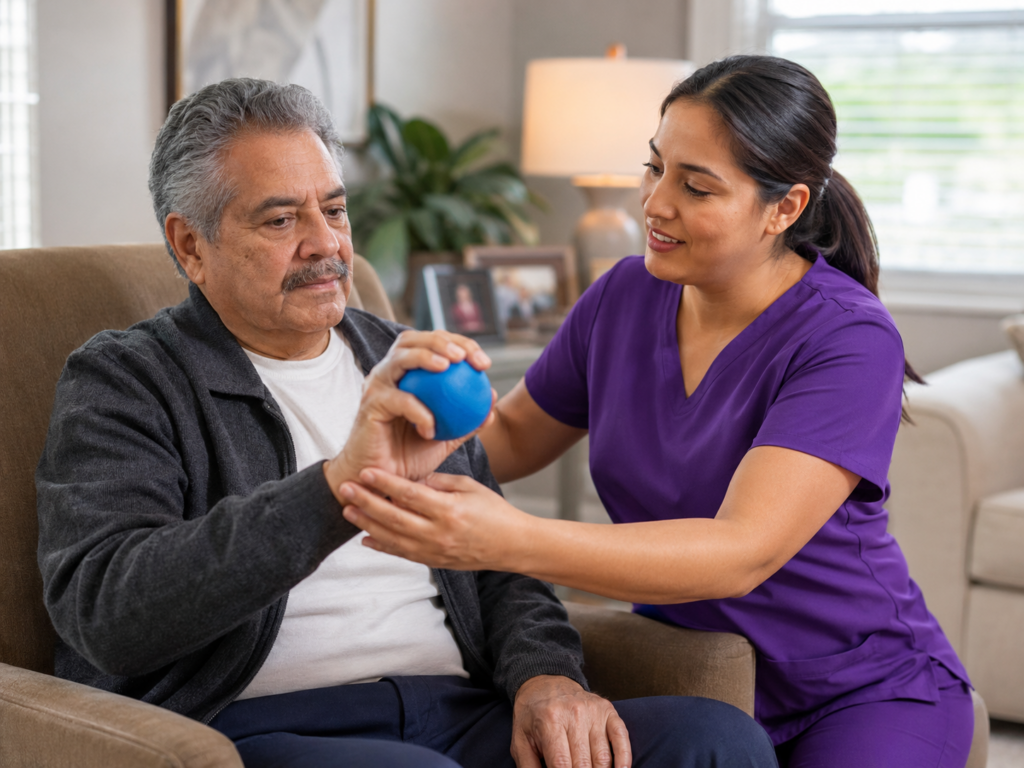
Parkinson’s Disease Is Not Only About Movement
One of the most important things families should understand is that Parkinson’s disease is not only a movement disorder. Many people experience non-movement symptoms that affect daily comfort, emotional well-being, and independence. In some cases, these symptoms may appear before obvious movement problems.
Non-movement symptoms may include sleep problems, constipation, depression, anxiety, fatigue, loss of smell, dizziness, urinary issues, pain, and changes in memory or concentration. A person may also experience softer speech, swallowing difficulties, or reduced facial expression. These changes can be frustrating because they may not be immediately recognized as part of Parkinson’s disease.
The Parkinson’s Foundation notes that Parkinson’s disease can include movement symptoms such as tremor and stiffness, along with non-movement symptoms such as depression and sleep issues.
This broader understanding is important because many families searching What Is Parkinson’s Disease are trying to understand changes that may not seem connected at first. A loved one may be sleeping poorly, feeling anxious, moving slowly, and struggling with daily routines. Looking at the whole picture can help families communicate more clearly with healthcare providers.

What Causes Parkinson’s Disease
The exact cause of Parkinson’s disease is not fully known. Researchers believe it likely develops from a combination of genetic, environmental, and age-related factors. In most cases, there is no single cause that explains why one person develops Parkinson’s and another does not.
Age is one of the strongest risk factors. Parkinson’s disease is more common in older adults, although younger individuals can develop it as well. Genetics may play a role in some cases, especially when Parkinson’s appears in multiple family members, but most cases are not directly inherited in a simple way.
Environmental factors may also contribute to risk. Researchers have studied possible links between Parkinson’s disease and certain pesticides, toxins, or chemical exposures. These connections are still being studied, and not every person with Parkinson’s has a known exposure.
It is important for families to understand that Parkinson’s disease is not caused by something the person did wrong. It is a complex neurological condition. If your loved one has been diagnosed, the focus should be on medical care, support, safety, and quality of life rather than blame or guilt.

How Parkinson’s Disease Is Diagnosed
There is no single simple test that confirms Parkinson’s disease in every case. Diagnosis is usually based on a person’s medical history, symptoms, a neurological exam, and sometimes their response to medication. A neurologist, especially a movement disorder specialist, may be involved in the diagnosis and treatment plan.
During an evaluation, a doctor may look for tremor, stiffness, slow movement, posture changes, walking patterns, balance concerns, facial expression, and coordination. The provider may also ask about sleep, mood, constipation, medications, family history, and how symptoms have changed over time.
Sometimes imaging or lab tests may be ordered to rule out other conditions that can cause similar symptoms. These tests may not directly diagnose Parkinson’s disease, but they can help doctors better understand what is happening.
Families can help by keeping notes before an appointment. Write down when symptoms began, what changes you have noticed, whether symptoms affect one side more than the other, and how daily activities have changed. Details about walking, handwriting, voice, sleep, mood, and falls can help guide the medical conversation.

Treatment Options for Parkinson’s Disease
There is currently no cure for Parkinson’s disease, but treatment can help manage symptoms and improve quality of life. A care plan may include medication, therapy, exercise, lifestyle adjustments, and supportive care. Treatment should be personalized because symptoms and progression can vary widely.
Medication is often used to help improve movement symptoms. Some medications help increase or mimic dopamine activity in the brain. Others may help manage specific symptoms or reduce complications. Over time, medication needs can change, so ongoing follow-up with a healthcare provider is important.
Physical therapy can support strength, flexibility, posture, balance, and walking. Occupational therapy can help individuals adapt daily routines and continue completing important tasks as safely as possible. Speech therapy may help with voice changes, communication, and swallowing concerns.
Exercise is also an important part of Parkinson’s care. Many healthcare professionals recommend regular movement because it can support mobility, balance, mood, and overall function. The right exercise plan depends on the person’s health, safety, and abilities.
Mayo Clinic notes that while there is no cure for Parkinson’s disease, medications and other therapies can help improve symptoms.

How Parkinson’s Disease Affects Daily Life
Parkinson’s disease can affect daily life in many ways. Some people remain independent for years, while others need more support as symptoms progress. The impact depends on symptoms, overall health, home safety, family support, and access to care.
Daily tasks such as bathing, dressing, meal preparation, housekeeping, transportation, and mobility may become more difficult. A person may need more time to complete routines that used to feel simple. They may become frustrated by slower movement or embarrassed by changes in independence.
This is why answering What Is Parkinson’s Disease requires more than a medical definition. Families need to understand how Parkinson’s can affect real life inside the home. Safety, comfort, emotional well-being, and routine all matter.
Fall prevention becomes especially important. Balance concerns, freezing episodes, dizziness, stiffness, or nighttime movement can increase risk. Families may need to consider better lighting, clear walking paths, grab bars, supportive footwear, and routine assistance during higher-risk moments.

When Home Care Can Help
Home care can be a valuable support for individuals living with Parkinson’s disease. Non-medical home care does not replace medical treatment, but it can help with daily routines, safety, companionship, and comfort.
A caregiver may assist with personal care, meal preparation, light housekeeping, mobility support, transportation, medication reminders, companionship, and supervision. This type of support can help individuals remain at home longer while reducing stress for family members.
For someone with Parkinson’s disease, consistency matters. A caregiver who understands routines, mobility needs, and personal preferences can help make each day feel more manageable. Support can be especially helpful during mornings, evenings, after appointments, or when family caregivers need relief.
Families exploring care options can learn more about Hummingbird Care Services. Home care can also support family caregivers. Caring for someone with Parkinson’s disease can be rewarding, but it can also be physically and emotionally demanding. Having dependable help can prevent burnout and make it easier for families to focus on connection rather than constant responsibility.

Supporting a Loved One with Parkinson’s Disease
Supporting someone with Parkinson’s disease requires patience, flexibility, and understanding. Symptoms can change from day to day. Some mornings may be harder than others. A loved one may move slowly, need extra time, or become frustrated when their body does not respond the way it used to. One of the most important step is knowing what is Parkinson’s disease.
One of the best things families can do is create supportive routines. Keep frequently used items easy to reach. Allow extra time for dressing, meals, and appointments. Encourage safe movement and avoid rushing. Speak clearly, listen patiently, and give your loved one space to participate in decisions about their care.
It is also important to stay connected with healthcare providers. Sudden changes in mobility, swallowing, confusion, mood, falls, or medication response should be discussed with a medical professional. Parkinson’s care often requires ongoing adjustments.
If your family is beginning to think through long-term support, learning about a care provider’s values and approach can help. You can read more about Hummingbird Care Services here:
https://hummingbirdcareservices.com/about-us
What Families Should Remember
What Is Parkinson’s Disease is an important question, but families do not need to learn everything all at once. Parkinson’s disease is a progressive neurological condition that affects movement and can also affect sleep, mood, digestion, energy, communication, memory, and independence. It can create challenges, but support is available.
The most helpful approach is to stay informed, seek medical guidance, and build a care plan that fits the person’s needs. This may include physicians, therapists, family caregivers, home care providers, and community resources.
Every person with Parkinson’s disease is different. Some symptoms may remain mild for years. Others may require more support sooner. The right combination of treatment, therapy, home safety planning, exercise, emotional support, and in-home assistance can help individuals continue living with dignity and comfort.

Conclusion
What Is Parkinson’s Disease is a question many families ask when they begin noticing changes in a loved one’s movement, balance, energy, or daily routines. Parkinson’s disease is a progressive neurological disorder that affects the brain and nervous system. It is best known for movement symptoms such as tremor, stiffness, and slowed movement, but it can also affect mood, sleep, digestion, communication, and independence.
Although Parkinson’s disease cannot currently be cured, treatment and support can make a meaningful difference. Medical care, therapy, exercise, home safety adjustments, family involvement, and non-medical home care can all help improve daily life.
If your loved one is experiencing changes that make everyday routines more difficult, Hummingbird Care Services can help provide supportive in-home care tailored to their needs. Our team is here to help families navigate care with patience, dignity, and dependable support. We hope this helps you understand what is Parkinson’s disease.