
Families who are worried about memory loss often search for simple ways to understand whether a loved one may be showing signs of cognitive decline. They may notice forgetfulness, confusion, difficulty following directions, changes in movement, trouble completing familiar tasks, or unusual behavior. During that search, many come across a phrase that sounds quick and easy: What is the Two Finger Test in Dementia?
The two finger test in dementia is generally described online as a simple observation or screening-style activity that asks a person to follow a short hand-movement instruction, such as holding up two fingers, copying a finger position, or coordinating one hand movement with another. The idea is that the task may reveal changes in coordination, attention, motor planning, or the ability to understand and follow instructions.
However, it is important to be very clear from the beginning: the two finger test is not a formal diagnosis of dementia. It should not be used by families to decide on their own whether someone has Alzheimer’s disease, vascular dementia, Lewy body dementia, Parkinson’s disease dementia, or any other condition. Dementia diagnosis requires a complete medical evaluation, which may include history, memory and thinking tests, physical examination, blood tests, medication review, brain imaging, and specialist assessment. The Alzheimer’s Society explains that dementia diagnosis may involve mental ability tests, brain scans, and blood tests to check for other conditions that could be causing symptoms.
A simple hand-movement test may raise concern if a person struggles with instructions or coordination, but it cannot explain why the difficulty is happening. A person may struggle because of arthritis, stroke history, Parkinson’s disease, tremor, poor vision, hearing problems, anxiety, medication effects, fatigue, neuropathy, or another health issue unrelated to dementia. That is why any concerning result should be treated as a reason to speak with a medical professional, not as proof of dementia.

Why People Talk About the Two Finger Test
The reason families ask What is the Two Finger Test in Dementia is usually because they are looking for something practical. Dementia can be frightening, and many early signs are easy to dismiss. A parent may forget names, repeat questions, misplace items, or struggle with routines. Family members may wonder whether the changes are normal aging, stress, medication side effects, depression, or something more serious.
A simple test feels appealing because it seems like it might offer a quick answer. If a loved one can copy a gesture or follow a direction, the family may feel reassured. If they cannot, the family may feel alarmed. But dementia is far more complex than one short task.
The two finger test is often discussed as a way to observe whether a person can process a simple instruction and turn it into a coordinated movement. That can involve several abilities at once: hearing or understanding the instruction, paying attention, remembering what was asked, planning the movement, and physically carrying it out. Some dementia-related conditions can affect these abilities, but so can many non-dementia conditions.
This is why the test may be better understood as a conversation starter. It may help a family notice that something has changed, but it does not answer the bigger medical question. If someone struggles, the next step is not to label them. The next step is to document what happened and ask a doctor for a proper evaluation.
How the Two Finger Test Is Usually Described
There is not one universally standardized version of the two finger test used across all dementia clinics. Online descriptions vary. Some describe asking the person to hold up two fingers. Others describe asking the person to copy a hand gesture. Some refer to coordinated hand movements, such as showing two fingers with one hand while pointing with the other. Others connect it loosely to finger-position or motor-planning observations.
Because the phrase is used inconsistently, families should be careful. A test that is not standardized can be misunderstood easily. In medicine, a reliable screening tool needs clear instructions, scoring, validation, and evidence showing how well it detects a condition compared with proper diagnostic standards. A casual two finger activity does not meet that standard for diagnosing dementia.
That does not mean hand movement and coordination are irrelevant. Neurological conditions can affect movement, planning, visuospatial skills, and the ability to follow commands. Doctors may observe movement, reflexes, gait, coordination, and behavior during a neurological exam. Specialists may also use structured cognitive tests to evaluate memory, attention, language, orientation, visuospatial ability, and executive function.
The key difference is that trained clinicians interpret these findings in context. They consider the person’s medical history, medications, symptoms, physical abilities, mood, sleep, hearing, vision, and other health conditions. A family doing a quick test at home cannot safely make those distinctions.

What the Test Might Suggest
If a person struggles with a two finger instruction, it may suggest that something deserves attention. They may have trouble understanding the instruction, remembering it long enough to respond, planning the movement, copying a gesture, coordinating both hands, or physically moving their fingers.
In some cases, that difficulty could be related to cognitive change. Dementia can affect more than memory. It can affect attention, problem-solving, language, spatial awareness, judgment, movement planning, and the ability to complete familiar tasks. A person may appear physically capable but still struggle to translate an instruction into action.
In other cases, the reason may not be dementia at all. Arthritis can make finger movement painful. A prior stroke may affect one side of the body. Parkinson’s disease may cause slowness, stiffness, tremor, or coordination changes. Poor hearing may cause the person to misunderstand the instruction. Anxiety may cause them to freeze. Medication side effects may slow thinking or movement. Vision problems may make it hard to copy a gesture.
This is why What is the Two Finger Test in Dementia should always be answered with caution. The test may reveal a concern, but it does not explain the cause. A failed or confusing result should lead to a careful medical conversation, not a conclusion.
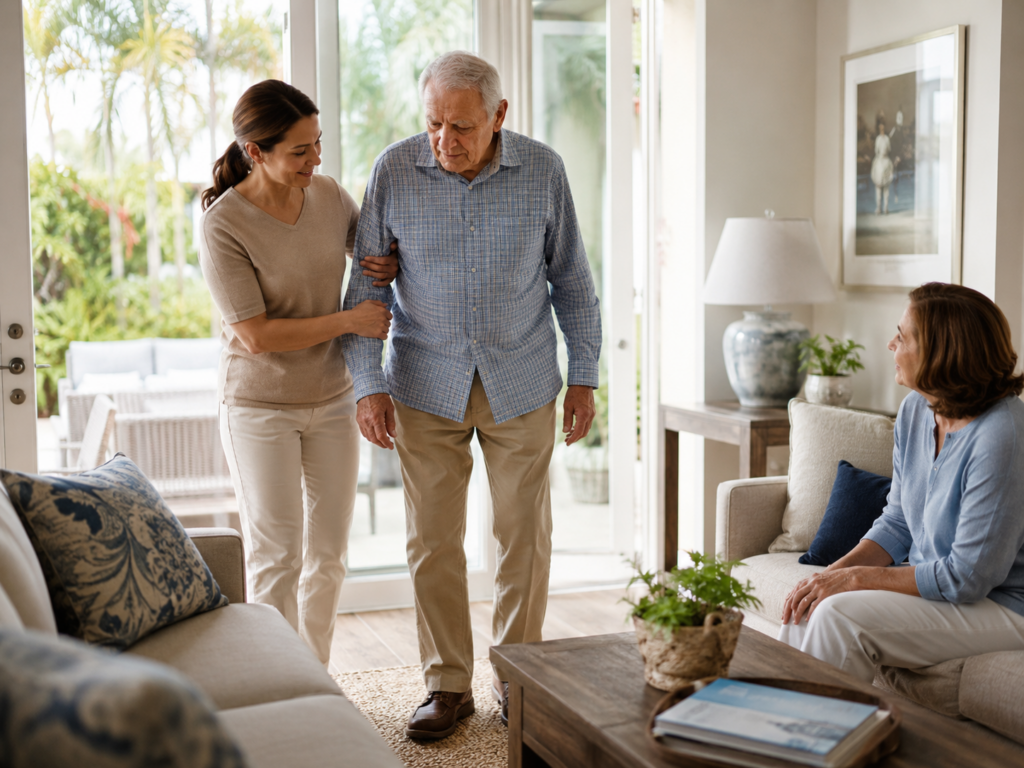
Why It Cannot Diagnose Dementia
Dementia is not diagnosed from one hand movement. A proper dementia diagnosis looks at patterns over time. Doctors want to know what symptoms have changed, when they started, how they affect daily life, and whether there are other possible explanations.
The Alzheimer’s Society notes that a GP will try to determine what is causing symptoms, which could be dementia or another condition, and that the person may later be referred to a memory service for more specialized testing and assessment. A specialist may test memory, thinking, and responses to different kinds of questions, and brain scans may be used to check for changes in the brain.
This matters because many treatable conditions can look like dementia. Vitamin deficiencies, thyroid problems, depression, sleep disorders, infections, medication side effects, dehydration, alcohol use, hearing loss, and other medical issues can affect thinking and behavior. Some of these can improve when treated.
A two finger task cannot check bloodwork. It cannot review medications. It cannot distinguish depression from dementia. It cannot show whether a person has had a stroke or has changes in the brain. It cannot tell whether symptoms are due to Alzheimer’s disease, Lewy body dementia, Parkinson’s disease dementia, vascular changes, or another condition.
Families should think of the test as an observation, not an answer. If the result is concerning, the safest response is to request a medical evaluation.
How Families Can Use Observations Responsibly
If a loved one struggles with a simple hand instruction, families should avoid embarrassing them or repeating the test in a way that feels like a quiz. Dementia concerns are emotionally sensitive. A person may feel ashamed, defensive, frightened, or frustrated if they sense they are being tested.
A better approach is to observe gently and write down what happened. Did the person misunderstand the instruction? Did they use the wrong hand? Did they seem confused? Did they become upset? Did they have trouble moving their fingers physically? Did they do better when the instruction was repeated? Did the problem happen once or many times?
Families should also write down other changes. Is the person repeating questions? Getting lost? Missing bills? Forgetting medications? Having trouble cooking? Struggling with hygiene? Becoming suspicious? Losing interest in hobbies? Falling more often? Having trouble finding words? Acting differently in the evening?
These real-life examples are often more helpful to a doctor than the two finger test itself. Dementia diagnosis depends heavily on how changes affect everyday life. A doctor will want to know whether the person is still managing finances, medications, appointments, meals, driving, shopping, personal care, and safety.
Signs That Deserve a Medical Evaluation
A two finger test result may be one small clue, but families should look at the broader picture. It may be time to seek medical evaluation if a loved one has memory problems that interfere with daily life, confusion about time or place, trouble completing familiar tasks, poor judgment, difficulty managing money or medications, personality changes, withdrawal, repeated falls, or trouble following conversations.
It is also important to seek help when changes are sudden. Sudden confusion, weakness, speech trouble, facial drooping, severe headache, or sudden difficulty moving may be a medical emergency. Families should not assume sudden symptoms are dementia. Stroke, infection, dehydration, medication reactions, and other urgent conditions can cause rapid changes.
Gradual changes also deserve attention. A person may cover up symptoms for months. They may appear socially normal during brief visits but struggle at home. Adult children often notice unpaid bills, spoiled food, dents in the car, missed appointments, or increasing clutter before the person admits anything is wrong.
Early evaluation can help families understand what is happening. Even when dementia is diagnosed, knowing the cause can help with treatment options, planning, safety, support, and legal or financial decisions. It can also help families avoid blaming the person for changes caused by disease.

What a Real Dementia Assessment May Include
A dementia assessment is much more complete than a simple two finger test. It often begins with a conversation about symptoms, medical history, medications, mood, sleep, family concerns, and daily functioning. The doctor may ask the person and family member what has changed and how long it has been happening.
The assessment may include memory and thinking tests. These are structured questions and tasks that help evaluate orientation, recall, attention, language, calculation, drawing, and problem-solving. These tests are not perfect, but they give clinicians a more consistent way to measure cognitive function.
Blood tests may be ordered to check for other causes of symptoms, such as thyroid problems, vitamin deficiencies, infection, or metabolic concerns. Brain imaging may be recommended to look for strokes, tumors, shrinkage patterns, or other changes. In some cases, the person may be referred to a neurologist, geriatrician, psychiatrist, or memory clinic.
The Alzheimer’s Society explains that a specialist may use several types of tests and scans to determine why changes are happening and whether dementia is present. This more complete process is important because different types of dementia may require different care planning.
Dementia Can Affect Movement and Coordination
Although the two finger test is not diagnostic, the connection between cognition and movement is real. Dementia can affect motor planning, coordination, balance, and the ability to sequence movements. A person may know what they want to do but struggle to carry it out.
Some people with dementia develop apraxia, which means difficulty performing purposeful movements even when strength and basic movement are present. For example, a person may have trouble using utensils, brushing teeth, buttoning a shirt, or copying gestures. They may not be weak, but the brain has difficulty planning the task.
Other types of dementia may affect movement more directly. Lewy body dementia and Parkinson’s disease dementia can involve stiffness, slowness, tremors, balance problems, and changes in alertness. Vascular dementia may follow strokes or reduced blood flow and can affect movement, thinking, and coordination depending on the areas of the brain involved.
Because movement changes can have many causes, they should be evaluated carefully. A person who suddenly cannot move one side of the body, speak clearly, or coordinate normally may need urgent medical care. A person with gradual changes may need a neurological evaluation.
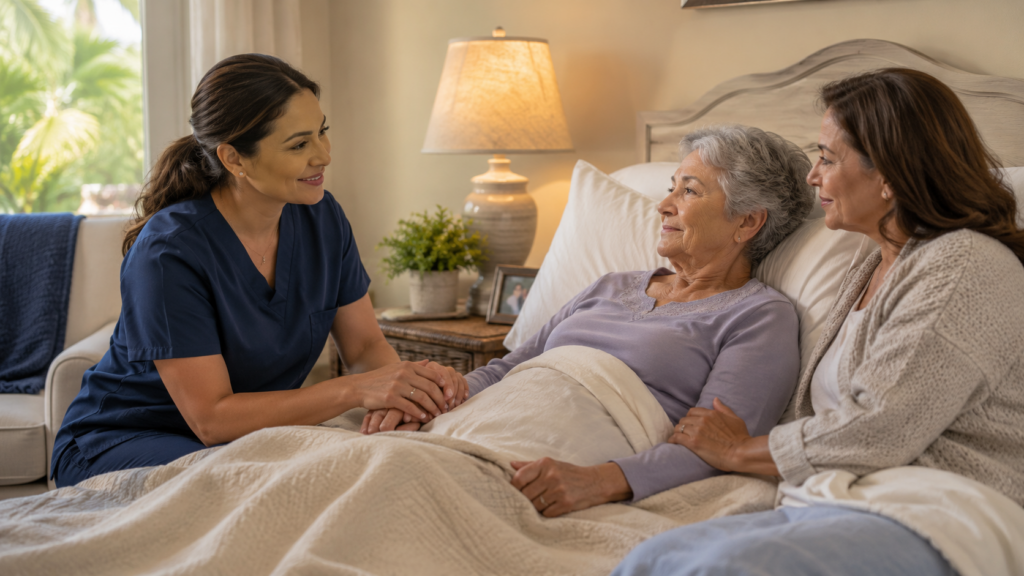
Why Home Safety Matters When Coordination Changes
If a loved one struggles with coordination, instructions, or movement planning, safety at home may become a concern. Even mild changes can increase the risk of falls, burns, medication errors, missed meals, wandering, or unsafe driving.
A person who has trouble following a two-step instruction may also have trouble following a medication schedule. Someone who cannot coordinate hand movements well may struggle with cooking, bathing, dressing, or using household tools. If the person has dementia, they may not recognize these risks or may insist they are fine.
Families should observe daily routines. Can the person safely get in and out of the shower? Can they use the stove? Can they manage stairs? Can they handle medications? Can they call for help? Can they respond appropriately if someone comes to the door? Can they safely drive?
Home safety changes may help. These can include removing trip hazards, improving lighting, labeling drawers, simplifying routines, using automatic shutoff devices, setting medication reminders, installing grab bars, and arranging supervision during higher-risk times of day. If safety concerns are growing, a physician, occupational therapist, or home care professional may help identify next steps.
How Caregivers Should Talk About Testing
Families should be careful with language. Telling someone, “I’m testing you for dementia,” may create fear or conflict. It can feel accusatory, especially if the person is already anxious about changes. A calmer approach is usually better.
Instead of focusing on the two finger test, families might say, “I’ve noticed a few things have been harder lately, and I think it would be good to check in with the doctor.” Or, “You seemed to have trouble with that instruction, and I want to make sure nothing medical is going on.” This frames the concern around health and support rather than blame.
If the person refuses evaluation, families may need patience. Some people fear losing independence. Others do not recognize their symptoms. Some become defensive because they are embarrassed. It may help to start with a routine wellness visit rather than a “dementia appointment.”
Families can also send concerns to the doctor ahead of time. A written note with examples may help the provider understand what is happening, especially if the loved one minimizes symptoms during the visit.

What Not to Do With the Two Finger Test
Families should not use the two finger test to diagnose, shame, or repeatedly challenge a loved one. They should not record the person without consent, post videos online, or use the result to prove a point in family arguments. Cognitive changes are deeply personal and should be handled with dignity.
They should also avoid false reassurance. If a loved one performs the hand movement correctly but still has serious memory or safety concerns, the family should not assume everything is fine. A person may pass a simple gesture test and still have dementia or another medical issue.
Likewise, families should avoid panic. If someone performs poorly once, it does not automatically mean dementia. They may have misunderstood, been tired, had pain in their hands, or felt pressured. Look for patterns, context, and changes in daily function.
The two finger test should never replace medical advice. It is at most a small observation that may encourage a conversation with a healthcare provider.
Other Simple Signs Families May Notice
In daily life, families may notice more meaningful clues than a two finger task. A person may stop cooking meals they used to prepare easily. They may struggle to follow a recipe, pay bills twice, forget appointments, repeat the same story, or misplace important items in unusual places.
They may have trouble with language, such as forgetting common words or losing their train of thought. They may become disoriented while driving familiar routes. They may lose interest in hobbies or withdraw socially. They may become more irritable, suspicious, anxious, or impulsive.
Changes in hygiene can also be important. A person may wear the same clothes repeatedly, avoid bathing, forget grooming, or seem unaware of body odor. Medication mistakes, poor nutrition, and unsafe housekeeping may also appear.
These real-world changes are often more important than any single informal test. Families should pay attention to whether the person can still manage ordinary life safely and consistently.
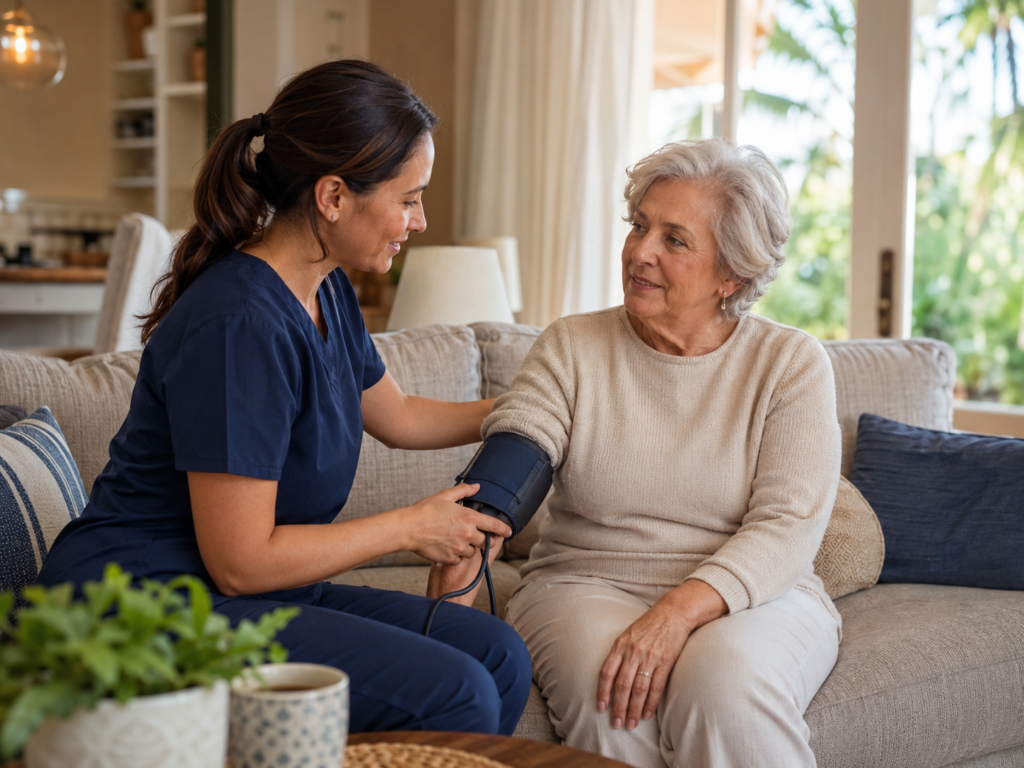
How Home Care Can Help When Dementia Is Suspected
When a family is concerned about dementia, home care can sometimes provide practical support while medical evaluation is underway. A caregiver can help with meals, reminders, personal care, companionship, transportation, light housekeeping, and supervision. This can reduce immediate risk without forcing a rushed decision about facility care.
Home care can also give families another set of eyes. A caregiver may notice patterns in appetite, mood, confusion, bathing, sleep, mobility, and safety. They can report concerns to the family so changes are not missed. This can be especially helpful when adult children do not live nearby or when a spouse is overwhelmed.
For someone with confirmed dementia, consistent care at home can support routine. Dementia often becomes harder when the day feels unpredictable. Familiar caregivers, calm reminders, structured meals, safe activities, and gentle redirection can help reduce stress.
Home care does not diagnose dementia. It does not replace medical care. But it can support daily life and help families manage the practical side of memory loss, confusion, and changing abilities.

Understanding the Two Finger Test Clearly
So, What is the Two Finger Test in Dementia? It is commonly described as a simple hand-movement or finger-position task that may show whether someone can follow instructions, coordinate movement, or copy a gesture. It may be discussed online as a quick observation tool, but it is not a validated stand-alone dementia diagnosis.
A concerning result should be handled thoughtfully. Families should document what happened, look for other changes in daily life, and speak with a medical professional. The person may need a proper dementia assessment, but they may also need evaluation for other health issues that can affect thinking or movement.
The safest way to understand What is the Two Finger Test in Dementia is to treat it as one small clue, not a final answer. Dementia is complex. Diagnosis requires professional evaluation, and care planning should protect the person’s dignity, safety, and independence as much as possible.
For families in Vero Beach and Indian River County, Hummingbird Care Services provides memory support and non-medical in-home care for loved ones who need help with daily routines, safety, companionship, and personal care. Families can learn more about Hummingbird’s memory support services, in-home care services, and personal assistance services when dementia-related changes begin affecting daily life.
When memory concerns, coordination changes, or safety issues become harder to manage alone, extra support at home can help families feel less overwhelmed. Hummingbird Care Services can be reached at (772) 202-2213 for local guidance and care planning.